Category: Uncategorized
Michelle Lewin
Michelle Lewin, used to be a Venezuelan model, but now lives in Florida and is a fitness world influencer. On average, she gains 20,000 followers on all of her social media channels every day. She promotes her daily life, workouts, her products, and ways to eat and live healthily. She is passionate about fitness and being healthy and has imposed a positive impact on her followers.

Michelle Lewin is part time fitness model, part bodybuilder, part bikini model, and is seen across the entire world. Michelle is not originally from America, in fact she came in 2012 from the Latin Americans, and actually does not speak English that often. She mixes her posts from being in English and in Spanish. Most of her videos on Instagram and snapchat, she actually speaks in Spanish, yet she is still loved by all of America.

Michelle Lewin has a website, that includes an app that one can pay for, for workouts, meal plan, calorie and macro tracking. The app can be specifically adjusted to the individual based on their information, body type, and fitness aspirations. The app comes in English, and Spanish, and one can decide which they prefer. The app has a rating of 4.6 out of 5 stars.

Not only does she have an app, but on her website, she has workout videos, nutrition guides and plans, and even sells her products. Michelle Lewin sells workout clothing, workout gear, fitness supplements and nutrient books, and workout videos to be purchased. For fitness wear, she offers men’s, women clothing and even accessories. The fitness line is called one-one and has a few location stores in Europe and south America, but none in America. If one wanted to purchase some clothing, they would need to order online. Some of the accessories she sells, are waist belts, and other fitness tools to live in a healthy life.

Michelle Lewin uses many different aspects of the honeycomb framework model. One of the biggest ones that Michelle uses is sharing. This is through her daily posts of working out, wearing her products, and showing what she eats. Michelle also allows for people to contact her and build a relationship with her. She does both of the fundamental implications that sharing has to engage in social media. Michelle evaluates what her objectives are before sharing the content, and she also presents what degree the content should be shared so that the receiver understands and sees it.

The biggest part of the model that Michelle Lewin has become so successful from is how she has built up her identity. To begin, she had to develop who she was, and how she wanted others to see her virtual self. Her identity was public and grew on YouTube and Instagram.
According to TheFamousPeople website,
“Today, she is among the most sought after fitness models in the entire world. Michelle is also a YouTube star and a popular social media personality, with more than 9 million Facebook page likes, 13 million Instagram followers, 430k Twitter followers, and 346k YouTube subscribers as of April 2018.”
https://www.thefamouspeople.com/profiles/michelle-lewin-38108.php

Michelle Lewin has been very open about her life, and has not kept very many details of her past and current life a secret. She has been very open of her poverty life to begin with, and her struggles growing up. Not only this, but she also modeled in the past, for the Playboy magazine, which despite the negative comments from this, she still is open about her past. Her and her husband workout together, and love to share their daily life with their fans. Michelle Lewin has been very open to her fans, in hopes that they will see her credibility through her honest and caring identity and show that she truly wants to help others be successful in their goals.


Michelle Lewin also engages in conversations with her fans, celebrities, and other fitness and nutrient influencers. But despite having such a large fan base, there have been some negative criticisms surrounding Michelle. According to the Daily Star, many people have been very mad for her having fake breasts. Michelle has responded to this negative impact, that people say “she promotes a false prediction of a body” by saying,
“I’m not saying I’m 100% natural, my boobs are made by a surgeon, but still that’s far safer than what some women do to their bums.”
https://www.dailystar.co.uk/showbiz/420223/Michelle-Lewin-sex-life-la-cuerpa
Not only have people faulted her for putting out unrealistic body goals for women, others have also made criticisms to the fact that she flaunts around her body, and not promoting awareness for something more practical. Michelle Lewin posted a video of her being bit by a Bahamas pig on her butt all over media, and was attacked by fans and other influencers. According to Maxim, many models and influencers reacted to her video by saying,
“Some are feisty enough to bite your behind if they think you’re not feeding them. Maybe bring some extra food next time?”
https://www.maxim.com/women/michelle-lewin-shares-cheeky-video-of-wild-pigs-2019-2

Overall, despite some negative attitudes towards the fitness model and influencer, I believe she is still incredible and has been able to provide people with a positive aspect on working out. I believe our world sometimes neglect positive thinking, and taking care of one’s body, and she helps change this mindset. I have always been a loyal follower of Michelle Lewin and will continue.
“About Michelle Lewin” TheFamousPeople. April 18th, 2018. Accessed March 21, 2019. https://www.thefamouspeople.com/profiles/michelle-lewin-38108.php
“Your sex Life explodes!” Michelle Lewin says fitness CAN Change your life” Daily Star. By Nadia Mendoza. Published 16th January 2015. Accessed March 21, 2019. https://www.dailystar.co.uk/showbiz/420223/Michelle-Lewin-sex-life-la-cuerpa
“Instagram Model Michelle Lewin Shares Cheeky Video after being bitten by wild beach pig” Maxim. Published by Brandon Friederich, February 13th, 2019. Accessed March 21, 2010. https://www.maxim.com/women/michelle-lewin-shares-cheeky-video-of-wild-pigs-2019-2
One-One. Michelle Lewin Fitness. Accessed March 21, 2019. https://www.one0one.com/product-category/one-0-one/accessories/
Are we the same online and offline?
Much debate has been around considering if we are the same person online, as we are off line, and if this changes who we are. In general, we have had a lot of stresses and worries to portray ourselves the best we can online, due to the fact that we need job recruiters to like what they see. There is an overall fear in our culture that we need to be a better self-online, than we may be offline.

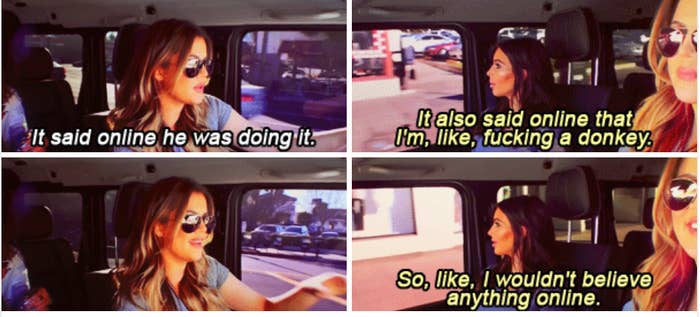
According to LinkedIn, they compared the difference between online and offline self, to how one may act jokingly, depending on who the person is around. One may use different language and express jokes differently depending on if they’re around friends, family, or at work. This is a great analysis to compare how one will portray themselves, on various media outlets. It is said that on snapchat, Whatsup, one may act more normal and like themselves than on other media outlets. This can be compared to LinkedIn and Facebook, which may portray oneself more formal and proper, for reasons of the audience in which they’re surrounded by.

According to LinkedIn,
https://www.linkedin.com/pulse/online-vs-offline-behavior-reasons-why-so-much-different-gerome/
“The thing is that, digital personality usually exacerbates the side which people show the less of”
LinkedIn justifies this as people have a fear of being judged by their actions and will not be accepted by society. LinkedIn believes that people only show pictures, and videos that show the best self of people. This is an example of Kim Kardashian and Kayne Wests wedding, as they had an abundant number of pictures and videos, yet after two days of editing one picture, Kim finally posted this one. This picture does not show the messy and stressful reality of planning a wedding, and how life can be hard at times. Instead the picture is edited and shows a beautiful scene of a wedding.
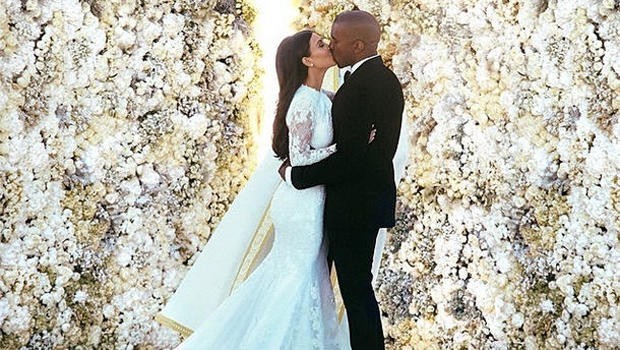
Life is very messy, and can be very difficult at times, yet most people do not depict this. Instead we edit, and only share specific and limited amounts of our lives. This is to ensure that people do not reject us, but instead believe we are perfect, and have a glamorous life. The trend is to show no failure, and no sadness but instead only show the best highlights of our life on media. This can be a combination of wanting to be accepted by society, having a good self-image for jobs, or the fear of people thinking you’re not perfect.

According to the Huffington Post,
https://www.theguardian.com/media-network/2015/sep/24/online-offline-personality-digital-identity
“People are now spending over 20 hours a week online, twice as much as 10 years ago, showing that 30% of our life in devoted to social networking.”
According to the Huffington Post, people spend so much time on social networking outlets, that it’s hard to fake it online, and instead we are constantly being observed. This shows that through emails, social media, and other outlets, our true personality will always show.
The Huffington Post believes,
https://www.theguardian.com/media-network/2015/sep/24/online-offline-personality-digital-identity
“Yet in psychological terms there is no difference between the meaning of these dematerialized digital artefacts and our physical possessions – they both help us express important aspects of our identity to others and these identity claims provide the core ingredients of our digital reputation”
Not only this, but many studies have showed that our typical patterns online, can be accurately the same through valid personality tests. Many studies have showed what we like on Facebook, or what tweets we publish, can show how intellectual and emotionally stable we are as humans.

This makes light as to why advertisers use algorithms from our social media, to produce campaigns to our eyes, to sell products. Our online self through media depicts our interests and likes in life, showing our personality.

I believe that there’s a middle man in between this idea that we are the same, or different online verse off line. I believe that it depends on what social media outlet we use, showing the true depth as to who we are as humans. On LinkedIn and other professional sites for jobs, we tend to only show very positive highlights from our lives, to help differentiate ourselves from others. Where as on snapchat, we may post or send snaps that truly shows our moods and daily life to close friends. We show emotions on this outlet, that other media may not depict. I also believe that what we search online, like, and look at online, shows our true personality this way. Even though only posting one picture on Instagram from a trip that we pick and edit as being the best, we still are presenting what we have done in life.
Even though people may only post things online that shows their best self, there are some people, like celebrities who post things from their daily life, that may not be special or significant. Below is an example of Billy Eichner, holding a baby he does not know who they belong too. By posting this picture, one can see there is no filter, the caption is funny and depicts a real day for Billy, showing his humorous side. This shows, that some people may not care what others see of them. I believe are people who posts pictures of their lives, as to which they seem to not care about, only wanting to show their true self.

While on the contrary, some celebrities will post only a few images that shows their favorite moments in life. I relate this to celebrities who win awards. This is similar to the Kim Kardashian image of her and Kayne’s wedding, only showing one glimpse of the special time for them. Below is an image that Lady Gaga posted, after recently winning the Golden Global Awards, for a Star is Born.

“Online vs Offline behavior, or the reasons why they are so much different,” Likedin, Google, April 26 2016, https://www.linkedin.com/pulse/online-vs-offline-behavior-reasons-why-so-much-different-gerome/
“How different are your online and offline personalities?” Huffington Post, Google, September 24th 2015, https://www.theguardian.com/media-network/2015/sep/24/online-offline-personality-digital-identity
Digital Natives, and New Media Literacy
Henry Jenkins is a very notable publisher who posted about very fascinating articles on Millennials and digital natives. During the first article, Jenkins first identifies who are millennials. This is very good to understand, as there are many different ideas on the age, and birth range for who makes up millennials. In this article, they are noted as being from years 1980-2000. He describes them as being the children of baby boomers, and how many studies have been done to this generation to who they are and what they like. According to Jenkins,
The figure of the Millennials is approached with a central objective: to better understand the minenic entrepreneurial initiative.”
http://henryjenkins.org/blog/2017/12/19/millenials-new-media-and-social-change-part-one

This correlates well with the idea, that this generation is the main one in the workforce. After many in-depth interviews, they have been able to analysis the working behavior, and the attitudes towards working, and unemployment. Millennials are far different from past generations, as they have been born into a technology centered world and have been shaped from this. Jenkins continued to talk about digital natives, and digital immigrants, and what these terms mean. According to Jenkins,
A digital native is someone who was raised in a digital, media-saturated world.
http://henryjenkins.org/blog/2017/12/19/millenials-new-media-and-social-change-part-one
This means that although many millennials have been born into a media centered world, that does not mean that they are all digital natives. This is due to the fact that some have grown up in an area with no technology, meaning that they are not digital natives.

The term ‘digital native’ was coined by Marc Prensky in 2001. He argued that digital-native children have vastly different learning requirements than what he called:
‘Digital immigrants,’ and that digital natives “think and process information fundamentally differently.”
http://henryjenkins.org/blog/2017/12/19/millenials-new-media-and-social-change-part-one

The next concept derived from Jenkins is the term digital immigrant, which according to Jenkins is a person born or brought up before the widespread use of digital technology. This can closely relate too many baby boomers, who may be millennials parents. This means that many of the digital immigrants have adopted the web technologies and may still get informal from traditional news sites. This also means that a digital immigrant will prefer to talk in person, rather than on the web. They also prefer to have interaction with one or few people, rather than many. This is different from digital natives, as they prefer multimedia orientation. This also makes sense why many digital natives, prefer to be on a phone, and attached to a technological device at all times. This comes into play with the notion that many digital immigrants believe that millennials are saturated by media, which in turn makes them not sociable.

I believe that as a generation surrounded by technology, we may have many distractions, but are not socially stunted by this. I believe that as a generation we supplement forms of communication with technology but do indeed value person to person interactions. I believe that as a generation of many distractions, we have learned to multitask very well, and are able to absorbs many forms of content from this.

In Henry Jenkins article, WHAT WIKIPEDIA CAN TEACH US ABOUT THE NEW MEDIA LITERACIES (PART ONE), the reader is informed with what is the new media literacies. According to Jenkins,
A participatory culture is one where there are relatively low barriers to artistic expression and civic engagement, where there is strong support for creating and sharing what you create with others, where there is some kind of informal mentorship whereby what is known by the most experienced gets passed along to newbies and novices, where members feel that their contributions matter, where members feel some degree of social connection with each other at least to the degree to which they care what other people think about what they have created.”
http://henryjenkins.org/blog/2017/12/19/millenials-new-media-and-social-change-part-one
This is derived from the notion that in a participatory culture, we are active in what news we share, and want to learn from. This means that we are active in political, economic, and social issues in the world. As opposed to traditional culture that may only focus on one issue, and the public acts as consumers, rather than producers. Here in the participatory culture, we active as active members, who want to create the content to which we share. It is said, by Jenkins, that this is due to the fact we were exposed to open ended games, to which may not have one single winner, and fantasy novels.

When Jenkins connects millennials participatory culture, he does a fantastic job of relating this to Wikipedia. This is because anyone can produce things on this site, for the world to see. Although Wikipedia has caught major backlash from this, the site itself has done many things to ensure the content posted is somewhat reliable, and what others want to hear.

Leigh Blackall, wrote an article titled Participatory culture through Wikipedia, stating that she agrees that Wikipedia is very useful for the mind, and mimics how we are taught in classrooms. Blackall claims that;
Are all designed to show how a participatory culture is what will turn learning around – whether through Wikipedia or good use of Creative Commons, or more
https://judyoconnell.com/2007/10/05/participatory-culture-through-wikipedia/
I agree with this notion, that having a participatory culture, whether we make memes, posts, or design articles on Wikipedia, is helpful for our generation, and an easy way to spread information. With this in mind, I do think it is important for everyone to know that although things are on the internet, that does not mean that the content is true.
Henry Jenkins relates well with Blackall, as he states…
The participatory cultures we are describing are ones where teens and adults interact but with less fixed and hierarchical relations than found in formal education
http://henryjenkins.org/2007/06/what_wikipedia_can_teach_us_ab.html

I agree with both, as we learn far differently from that of digital immigrants, and that things are changing in the world, meaning the new media literacies are relevant, active, and how we engage in news and information.
“Millennials, New Media and Social Change” Part one. Confessions of An ACA-Fan. Henry Jenkins. Accessed February 14th 2019. http://henryjenkins.org/blog/2017/12/19/millenials-new-media-and-social-change-part-one
“Participatory Culture Through Wikipedia” HeyJude Learning. By Leigh Blackall. Accessed February 14th 2019. https://judyoconnell.com/2007/10/05/participatory-culture-through-wikipedia/
WHAT WIKIPEDIA CAN TEACH US ABOUT THE NEW MEDIA LITERACIES (PART ONE). Confessions of An ACA-Fan. Henry Jenkins. Accessed February 14th 2019. http://henryjenkins.org/2007/06/what_wikipedia_can_teach_us_ab.html
Meme or Trick?
Many people are very familiar with the social media platform, Facebook. Facebook is the largest social media platform with over 2.2 billion monthly active users as of January 2018. Facebook was founded in 2004 by Harvard student Mark Zuckberg, and a few other peers of his. This social media platform encourages individuals to post their daily life, share personal information to help connect them with people around them. http://blog.practicalethics.ox.ac.uk/2018/04/facebook-big-data-and-the-trust-of-the-public/

According to the University of Oxford, Alexander Kogan, a Cambridge University Psychologist, created an app called “thisisyourdigitallike” which required people to add this app to their Facebook Account. This data from the app was originally meant for academic research, so therefore Facebook allowed this to happen. When Facebook learned that more than the original 50 million profiles, turned into 87 million, Facebook banned the app.
“We immediately banned Kogan’s app from our platform” and “demanded that Kogan and Cambridge Analytical formally certify that they had deleted all improperly acquired data”
Mark Zuckerberg
Although Facebook claimed to have removed Kogan’s App, they did not and further. Facebook thus began to go further against ones Digital Privacy, which according to The Center for Internet and Society at Stanford Law School …
http://cyberlaw.stanford.edu/focus-areas/privacy
“The protection of an individual’s information that is used or created while using the Internet on a computer or personal device. “
There are many controversial views on digital privacy, as many people do not want companies to use algorithms to send their information, gather information from them. Because of the Cambridge Analytical Data leak, many people are now frightened to what information Facebook has obtained from them, and sent to other researchers. Through these apps, many third-party apps, now had information on their users, which they were unaware of. The third party apps are examples of, “Do you want to sign in with Facebook,” to websites and other apps. When people now sign in to other platforms with Facebook, those apps now have information on them. The #10yearChallenge became a huge way for researchers to obtain a lot of information on users, that they were very unaware about.
Many people are now stakeholders to facebook, and are negatively effected from having their private information used. Facebook has now been able to use face recognition, and other tools to know what to advertise to their users, and even tag them in pictures. Believing this is unethical, and not right, I believe Facebook should be more clear with the information they obtain from their users.
The #10yearchallenge
The 10 year challenge hashtag went viral very quickly, as users were asked to post their most recent Facebook profile Picture, next to their first one. As many people saw this as harmless and fun, there was deeper truth behind the screen. As mentioned earlier, the algorithms that allow for facial recognition, gathered data on how users age. The earlier talked about Cambridge Analytical developed psychographic profiles of the users from the ten year challenge. Now companies like Insurance, had information on how the users age, based on the challenge, thus starting to raise insurance prices due to this factor. Believing that this is wrong, and Facebook should not be able to sell information like this to other companies is my stand point on the challenge. This is something they have been doing for a few years now, but the challenge has brought light to it.

Facebook saying “they’re Ethical”
Although many people are very upset about their information being sold, Facebook came out and said that they had written in the Terms and Conditions, that this is what they were doing, for research purposes. Many people have backlashed this notion, saying that the terms and conditions are very hard to understand, unless having professional experience with reading documents. Facebook also had support from Marketers who have obtained this information for years, to market and advertise to the right target market. Marketers claim this is a part of target marketing, and knowing who their consumer demographics are, to better sell the right products.


Meme’s From Challenge
People began to learn that their information was being sent to other users from the challenge, thus creating a curriclation of memes. In this form, I believe the memes were used as a good way to spread the word of the challenge, and to stop people form posting their #10yearchallenge.
However, as the memes began to start around the #10yearchallenge, people became a very unethical in approaching them by making fun of individuals. People began to mock others, create memes, and turn the challenge into a way to degrade one another. I believe the right approach to memes from this challenge is for spreading awareness, and not to be negative towards one another.


“Privacy,” Standford Law School, Google, accessed February 07, 2019. http://cyberlaw.stanford.edu/
“Practical Ethics,” “Facebook, Big Data, and the Trust of the Public” University of Oxford, published April 13, 2018. Accessed February 07, 2019. http://blog.practicalethics.ox.ac.uk/2018/04/facebook-big-data-and-the-trust-of-the-public/
MEMES
Memes have been around for years, but recently have gained more interest and given insights into younger individuals and even adults as a way to connect with each other. A meme can be words, pictures, videos, or a combination and normally reflect events happening now.
Memes started in 1976, by a Biologist, Richard Dawkins who published a book titled, The Selfish Gene
Dawkins named this concept “mimeme,” which is from the Greek word meaning “that which is replicated.” He later abbreviated it to meme, because it sounds similar to genes, which can be replicated and spread.
https://postlaunch.co/blog/memes-throughout-history-where-did-it-begin/
Posting memes helps social media marketing, and helps the influence of the internet culture.
That’s why marketers should get in on the fun and share meme-themed content to their social media profiles. This is particularly important if your audience is Millennials—the people who made the meme what it is today.
https://postlaunch.co/blog/memes-throughout-history-where-did-it-begin/
My Favorite Meme
My favorite meme is the Spongebob Square pants mocking meme, which has been taken into different contexts for making fun of a situation. During the episode, Spondgebob mocks a chicken, and people have taken this image and turned it into different meanings.
The SpongeBob mocking chicken meme comes from an episode of the show in which the world’s most-beloved sponge turns into a chicken every time he sees plaid. The first use of this image didn’t have anything to do with mocking or writing like a stutterer talks. Soon after, the SpongeBob mocking meme that we all love to hate went viral.
https://www.mandatory.com/fun/1457183-spongebob-mocking-meme
Examples of variations of the meme


This meme has been used for many different events, movies, political responses, and current topics. Many people may use just the picture, or the picture with various capital and lower cases letters, to create a mocking sound. The meme can be used for people who would like to make fun of a situation, or “mock” something/someone. With Spondgebobs pose, mannerisms, and the facial expression, people are able to get a vivid image of how he may be mocking someone.
The meme itself although very funny to some, also caught a lot of grief for political, war, and religion use. This meme has been use many times to mock a group, or stereotype, which can be very hurtful.
My Own Meme

Who am I? & Whats My Social Media
My name is Lauren Fussell

I am a female that is 21 years old
My First Social Networking Site
My first social networking site (SNS) was facebook, at age 13. My mother made me wait to get a facebook until I was at least 13. I remember being very frustrated with this rule as all of my friends had already had myspace and facebook. I wanted so badly to be connected with my friends, and remember being felt left out of my friends and others my age.
Evolution of my timeline
My first social media account was Facebook, and I was only 13 when I downloaded this. I remember posting anything, and everything on my timeline. The main posts I created were “Truth is” or “Like my Status if…” to create entertainment for me. This posting was normal and seen as something to get friends connected with each other. Much drama happened from facebook in middle school, and many girls started issues on this platform. Now on facebook, I only post pictures, mainly to inform my family and family friends what I am doing in life. I do not post on my timeline anything more than just pictures, especially now that I am traveling.


My latest SNS downloaded and regularly used is Linkedin. This is to help me get a summer internships, build my platform for graduation, and to network. This is a very grown up SNS for me, and is something I felt iI needed to download and use regularly, It has now given me insights to jobs, connections with businesses, and professors. I have to be very sophisticated and mature on this platform.

# of SNS
I use multiple SNS’s, but the main ones are Instagram and Snapchat. I also use facebook, Linkedin, whatsApp, Twitter, and Pinterest. I like to use Instagram because I can post my pictures, follow my favorite celebrities, and explore on the explore page. I like the personalization of instagram, that I can choose who I follow, even if someone follows me, I do not have to back. On facebook, I feel obligated to “friend” family friends, but do not want to necessarily see what they post. I like Snapchat, as I can create “streaks” with friends, and send them more personalized messages. I enjoy seeing my friends stories, as people are less strict and worried what they post, as they do delete in 24 hours.


My SNS
Snapchat is a multiple media platform that allows people to send pictures, direct messages, and post stories of their daily life. Snapchat was launched in September 2011, by three men. Dated May 9, 2012, Evan Spiegel who is the CEO, described the company’s mission:
“Snapchat isn’t about capturing the traditional Kodak moment. It’s about communicating with the full range of human emotion — not just what appears to be pretty or perfect.”
https://en.wikipedia.org/wiki/Snapchat
The new and innovative feature of Snapchat is that the posts of the stories only last 24 hours. Also all of the discovery posts, and feed posts will only last 24 hours as well. When sending direct snaps of videos, messages, or pictures to individuals or groups, they will be deleted after 1-10 seconds. The seconds are depended on what the sender would like it to be. Snapchat now also allows for people to save their pictures and videos as “memories” and will be reminded what they saved on each day a year+ later.
Extend: Snapchat extends ones privacy and allows for people to communicate intimately. The snapchat platform allows for communicating and talking without visual context. Because Snapchat deletes the messages after 10 seconds, this is very different from all other platforms as they do not delete media. Facebook and Instagram keeps every post, and is a much more formal way of presenting yourself.
Obsolesce: Snapchat obsolesces for personal branding. This is a never ending process of presenting yourself and who you are as a person. This platform closely relate to interpersonal communication, which is like face-to-face communication. This is because after sending messages, pictures and videos, they delete and are solely relied on the receivers memory.
Retrieve: The interpersonal communication is also seen in other forms of SNS, like facebook messaging, direct messages, and WhatsApp. Although Snapchat altered this and made for the messages to be deleted, they still function the same communication skills.
Reverse: The contents of Snapchat disappear and are not long term, like other platforms. The content is meant to be not permeant, making Snapchat different from other platforms and uses this to differentiate itself from other SNS’s. This is similar when one talks with someone, like oral communication, as they do not have it written down and is relied on their memory. Snapchat follows the same thing, besides the personal interaction of being with someone, but mimics the memory aspect.
Ambient Awareness: Social Media & Sense of Virtual Belonging
Human Beings are naturally social beings, and wanting to stay connected to other human beings. This social concept is achieved through social media, texts, and emails. Through the use of technology and social media, we are able to feel connected to people across the world in seconds.
To define Ambient Awareness, as of 8 August 2012, Cyborg Anthropology listed it as, a way of describing the idea of being “ambiently aware” of another’s actions, thoughts and experiences without having to be near them physically, and without specifically requesting such information.
“Ambient Awareness” Cyborg Anthropology, Accessed January 17th 2019. http://cyborganthropology.com/Ambient_Awarenesshttp://citeseerx.ist.psu.edu/viewdoc/download?doi=10.1.1.137.3313&rep=rep1&type=pdf
This definition means that we are able to get instant gratification when interacting with human beings, even if they aren’t physical bodies, but instead just virtual. Believing that being in a world where communication is easily ready, is a good thing that can help individuals stay connected anytime with friends and family. Having close loved ones living in different parts of the world, can be very difficult at times to try and stay connected. However, with the use of social media, and technology it is easy to now communicate with these loved ones.
According to Eindhoven University of Technology, Maslov’s theory of human needs, illustrates that social interaction is essential to satisfying human needs at many levels, in particular needs for belonging, love, and esteem.
Wijnand IJsselsteijn, Joy van Baren and Froukje van Lanen, “Staying in Touch
Social Presence and Connectedness through Synchronous and
Asynchronous Communication Media,” accessed January 17th 2019.
http://citeseerx.ist.psu.edu/viewdoc/download?doi=10.1.1.137.3313&rep=rep1&type=pdf
This helps explain why we as humans need and want this sense of connection through various platforms. It is clear that many people believe that our “satisfying needs” from social media, can be a danger. Many people believe that humans begins will become to interconnected with what others are doing, however I disagree as I believe these media platforms can be useful and helpful for all humans to use for their needs. Below is a tweet by celebrity Katy Perry who describes the use of FaceTime, to enjoy her family Thanksgiving day while she is busy on the travel and touring the country. Believing this to be a positive, and a great use of social media to stay connected with family members.

In the New York Times, a woman named Haley began to describe how she was able to stay connected to her friend’s daily life, as most individuals would not call each other for little updates about their daily life. I find this to be especially true for people who may be in a long-distance relationship or have friends they are not living with. When one is able to text little updates on their daily life, like what grade they made on an exam, or what they had for lunch, helps relationships grow and stay strong. Haley describes this notion as being “E.S.P” which transcribes to mean an invisible dimension floating over everyday life. Which I believe is healthy and good for the human to have these interactions with others. A student may go through their whole day without having any connection or may feel lonely. However, with the use of social media and the help of technology, that same student is able to connect with someone else anywhere in the world.
Not only can individuals stay connected to their family and friends, but they can also get news reports and information easily through the use of social media. This helps people know what is happening in the world and avoiding being oblivious to actual events happening. Contrary to the BBC, who say that people are focusing on the wrong social media and are not gathering the right information needed to make good judgements. I believe this to be untrue, as no matter how news is reported, there will always be biased judgements and inaccurate assumptions. This is a part of human nature, of making wrong accusations. Also, a part of our human nature makes people will deeper investigate issues they feel they need to, to get correctly informed. The article also suggest that humans spend the majority of their time on social media looking at platforms that do not even report news. I believe this is to be untrue, as most of the platforms used today like, Facebook, Twitter, or snapchat, have a form of world news for viewers.

Researcher believe that Anxiety is ignited from the use of social media. I complete disagree with this notion, as I believe that the unknown is the number one source of bringing anxiety to an individual. The unknown of the world, and having a question is what drives people to have anxiety. However, with the use of technology people can easily research and find their answers to the unknown.

Overall, I believe that social media is a good thing for humans to stay connected, informed, and use it as they wish. I believe that people have arguments for why is may not be a good thing for society, but overall the population is better off with technology and media.
http://www.bbc.com/future/story/20180104-is-social-media-bad-for-you-the-evidence-and-the-unknowns
“Staying in Touch”
Social Presence and Connectedness through Synchronous and
Asynchronous Communication Media,” accessed January 17th 2019.
http://citeseerx.ist.psu.edu/viewdoc/download?doi=10.1.1.137.3313&rep=rep1&type=pdf
“Ambient Awareness” Cyborg Anthropology, Accessed January 17th
2019. http://cyborganthropology.com/Ambient_Awarenesshttp://citeseerx.ist.psu.edu/viewdoc/download?doi=10.1.1.137.3313&rep=rep1&type=pdf
Who am I
Twitter: Lauren_fussell
Email: laurenfussell33@gmail.com

 Lauren Fussell